From the Field

Pool Tips From Someone Who Actually Works on Pools

Six years in the industry, CPO certified, and I work on pools in Winter Park every week. These are the things I tell my customers — no filler, no fluff.
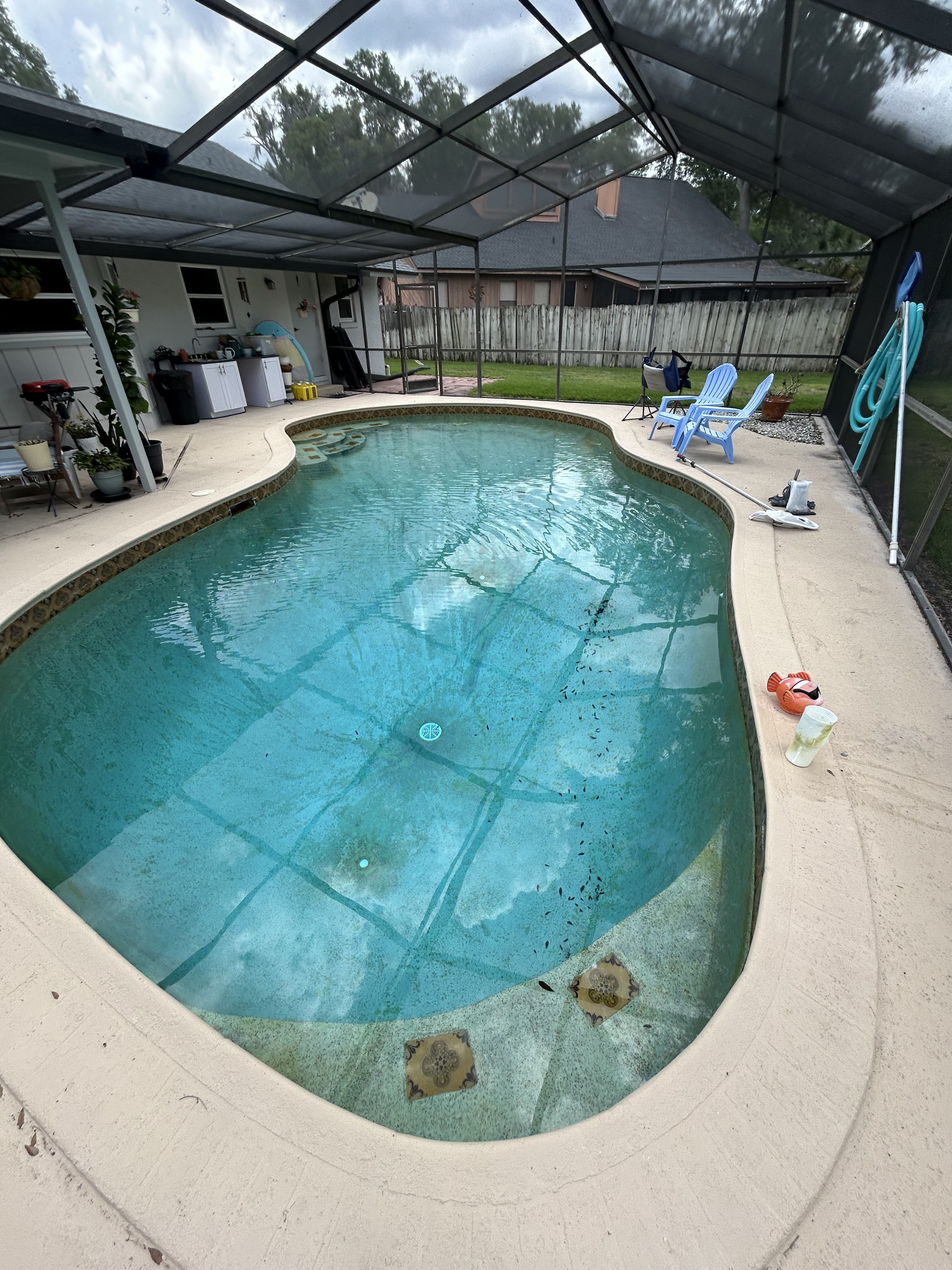
Crystal clear pool maintenance

How to Keep Your Pool Crystal Clear Year-Round

Learn the essential maintenance habits that prevent algae growth and keep your water sparkling in Florida's climate.

Why Florida Pools Need Year-Round Attention

Florida's heat, humidity, and near-constant sunshine create a perfect environment for algae and bacteria to thrive. Unlike northern states where pools get a break in winter, Florida pools stay in use 12 months a year — which means your maintenance routine never really stops.

The Weekly Non-Negotiables

  • Test your water chemistry — pH, chlorine, and alkalinity every week minimum. Florida heat burns through chlorine faster than you expect.
  • Skim the surface — Leaves and debris are fuel for algae. Don't let them sit overnight.
  • Brush the walls and floor — Even in a chemically balanced pool, brushing disrupts algae spores before they can take hold.
  • Vacuum or run the robot — The bottom is where debris settles and algae starts. Keep it clean.
  • Check your filter pressure — A clogged filter can't do its job. Clean or backwash when pressure rises 8–10 PSI above your normal baseline.

The Monthly Checks

  • Inspect pump basket and skimmer basket — empty both
  • Check for equipment leaks around pump and filter connections
  • Test cyanuric acid (stabilizer) levels — Florida sun degrades it slowly
  • Shock the pool — even a well-maintained pool benefits from a monthly shock treatment
Pro Tip: In Florida summers, your pool can lose up to 1 inch of water per week to evaporation. If you're topping off frequently, that's normal — but always retest chemistry after adding water, since fresh water dilutes everything.

Consistency beats intensity. A pool that gets a little attention every week will always outperform one that gets a big service every month. If you're unsure where your pool stands, we offer free water chemistry assessments — reach out here.

Pool water chemistry testing

Understanding Your Pool's Chemical Balance

A simple guide to pH levels, chlorine, and alkalinity—and why they matter for safe, comfortable swimming.

The Big Three: pH, Chlorine, and Alkalinity

Pool chemistry sounds complicated, but it comes down to three numbers you need to keep in range. Get these right and your pool will almost take care of itself. Let them drift and you'll have green water, eye irritation, or damaged equipment.

pH (Target: 7.4–7.6)

pH measures how acidic or basic your water is. Too low (acidic) and chlorine becomes overly aggressive — it'll irritate eyes and skin, corrode metal parts, and eat through your liner or plaster. Too high (basic) and chlorine becomes ineffective, no matter how much you add. Always fix pH before adjusting anything else — it affects everything downstream.

Chlorine (Target: 2–4 ppm free chlorine)

Chlorine is your pool's primary sanitizer. "Free chlorine" is what's available to kill bacteria and algae. "Combined chlorine" is chlorine that's already reacted with contaminants — it's inactive and creates that harsh chlorine smell. If your pool smells strongly of chlorine, you actually need MORE — it's a sign of high combined chlorine. Shock the pool to reset it.

Total Alkalinity (Target: 80–120 ppm)

Alkalinity is your pH's buffer. Without enough alkalinity, pH swings wildly with every rainstorm or chemical addition. With the right alkalinity, pH stays stable and your other chemicals work as intended. Think of alkalinity as the foundation — build it right and everything else is easier to manage.

The Other Numbers Worth Watching

  • Cyanuric Acid (40–80 ppm) — Stabilizes chlorine against UV degradation. Critical in Florida's sun. Too high and it locks up chlorine (chlorine lock).
  • Calcium Hardness (200–400 ppm) — Prevents water from leeching calcium from your plaster, which causes rough surfaces and surface damage.
  • Salt (for salt pools: 2700–3400 ppm) — If you have a saltwater pool, salt level determines how much chlorine your generator can produce.
Pro Tip: Test in the morning before the sun hits the pool. UV affects chlorine readings, and testing midday can give you a falsely low reading that leads to over-chlorinating.

If you've never had a professional water analysis done, it's worth doing once. Store test kits can miss nuances that a full digital analysis catches. Contact us for a free assessment.

Pool storm preparation Florida

Preparing Your Pool for Florida Storm Season

Protect your pool equipment and water quality before, during, and after tropical storms and hurricanes.

Before the Storm

The 24–48 hours before a major storm are your most important window. Here's what to do:

  • Shock your pool heavily — Add 2–3x your normal shock dose. Rainwater will dilute your chemistry, and a strong chlorine reserve buys you time.
  • Remove all loose items — Chairs, toys, floats, umbrellas. Anything that can become a projectile in high winds should come out of the pool area entirely.
  • Do NOT drain your pool — An empty pool can pop out of the ground from hydrostatic pressure during heavy rain. Leave the water in. It's also ballast against floating debris.
  • Turn off the pump and breaker — Protect your equipment from power surges. Don't leave it running unattended.
  • Remove your cleaner — Automatic cleaners can get tangled or damaged in storm conditions.

After the Storm

  • Remove all debris before running the pump — large debris can clog the impeller
  • Clean skimmer and pump baskets before turning equipment back on
  • Run the pump 24 hours continuously for the first day
  • Test and rebalance all chemistry — rain dilutes everything
  • Shock again if the water is cloudy or green
  • Inspect equipment for storm damage before sustained operation
Important: Do NOT swim in your pool for at least 24 hours after a major storm, even if it looks clear. Runoff from streets and yards can introduce bacteria, fertilizers, and other contaminants. Test before swimming.

If your pool turns green after a storm, don't panic — it's one of the most common calls we get every hurricane season. We offer same-week storm recovery service.

Pool filter maintenance guide

The Complete Guide to Pool Filter Maintenance

Everything you need to know about cleaning and maintaining your pool filter for optimal performance.

The Three Filter Types

Before you can maintain your filter, you need to know what type you have. Each works differently and has different maintenance needs.

  • Sand Filter — The most common in Florida. Water passes through sand which traps debris. Clean by backwashing (reversing water flow) when pressure rises 8–10 PSI above baseline. Replace sand every 5–7 years.
  • Cartridge Filter — Uses replaceable cartridges. No backwashing — you remove the cartridge and rinse it with a garden hose. Clean every 4–6 weeks. Replace cartridges every 1–2 years depending on pool load.
  • DE Filter (Diatomaceous Earth) — The most thorough filtration. Uses DE powder to coat filter grids. Backwash similar to sand, but you must add fresh DE powder after each backwash. Deep clean grids annually.

Signs Your Filter Needs Attention

  • Pressure gauge reads 8–10 PSI above your normal clean baseline
  • Pool water is cloudy even with correct chemistry
  • Reduced return flow from jets
  • Algae returning quickly after treatment

The Annual Deep Clean

Regardless of filter type, every pool filter benefits from a professional deep clean once a year. For cartridge and DE filters this means a chemical soak to remove oils, sunscreen, and mineral buildup that hosing alone can't clear. For sand filters, it means checking the laterals and considering a sand replacement if it's been more than 5 years.

Pro Tip: Never clean your filter too often. Counter-intuitively, a slightly dirty filter (just slightly!) actually filters better — the fine layer of debris on the media helps catch smaller particles. Clean when pressure rises, not on a calendar schedule.

Not sure what type of filter you have or when it was last properly serviced? We can assess it on your first visit.

Salt water vs chlorine pool comparison

Salt Water vs. Chlorine Pools: What's Best for You?

Compare the pros and cons of salt water and traditional chlorine pools to make the right choice for your home.

First, the Big Misconception

Saltwater pools are NOT chlorine-free. They use a salt chlorine generator (SWG) that converts dissolved salt into chlorine through electrolysis. You're still swimming in a chlorinated pool — just one that generates its own chlorine automatically instead of using store-bought tablets or liquid.

Saltwater Pool Advantages

  • Softer feel — Many swimmers notice the water feels silkier. Lower chloramine levels mean less eye and skin irritation.
  • Lower ongoing chemical costs — Salt is cheap and lasts. You eliminate the recurring cost of chlorine tablets.
  • More consistent chlorine levels — The generator runs continuously, maintaining steadier chemistry than manual dosing.
  • Convenience — No handling or storing liquid chlorine or tablets.

Saltwater Pool Disadvantages

  • Higher upfront cost — A salt chlorine generator costs $800–$2,000 installed.
  • Cell replacement — The generator cell wears out every 3–7 years ($300–$700 to replace).
  • Corrosion risk — Salt is corrosive. It can damage certain metals, stone decking, and nearby landscaping over time if not managed.
  • Still needs chemistry maintenance — pH, alkalinity, cyanuric acid, and calcium hardness still require monitoring. Salt pools are not "maintenance free."

Which Is Right for You?

If you swim frequently and find traditional chlorine irritating, saltwater is worth the investment. If you have a heavily landscaped pool deck with natural stone or nearby metals, discuss corrosion risk with your service pro first. Both systems require professional maintenance — the generator doesn't replace the need for a knowledgeable technician.

Pro Tip: Saltwater pools in Florida require closer monitoring of cyanuric acid than traditional pools. The generator produces chlorine continuously, and without adequate stabilizer, Florida's UV burns it off faster than it's made — leaving you unprotected despite the generator running.

Thinking about converting? We can walk you through the pros and cons for your specific pool.

Summer pool care Florida heat

Summer Pool Care: Beating the Florida Heat

Special maintenance tips to keep your pool pristine during the hottest months of the year.

Why Summer Is the Hardest Season for Your Pool

Florida summers are brutal on pool chemistry. High UV radiation destroys chlorine faster than any other season. Water temperatures above 84°F accelerate algae growth exponentially. Heavy afternoon thunderstorms dilute chemicals and introduce organic matter. You're fighting all three simultaneously from June through September.

Increase Your Chlorine Frequency

In summer, a once-weekly shock is often not enough. Here's what changes:

  • Check and adjust chlorine levels 2–3x per week during peak heat
  • Keep cyanuric acid (stabilizer) at 40–60 ppm to protect chlorine from UV burn-off
  • Shock after every heavy rainstorm — don't wait for your weekly service day
  • If water temp exceeds 84°F, consider increasing your service to twice weekly

Fight Algae Before It Starts

  • Brush pool walls weekly — algae starts at the waterline and in corners before you can see it
  • Keep phosphate levels low — algae needs phosphates as food (test monthly in summer)
  • Run your pump longer — 10–12 hours per day in summer vs. 6–8 in winter
  • Don't let leaves or debris sit — organic matter consumes chlorine rapidly

Evaporation Is Draining Your Chemicals Too

Florida pools lose 1–2 inches of water per week to evaporation in summer. When you top off with fresh water, you're diluting your chemistry. After every significant fill, test and readjust — don't assume yesterday's levels are still valid.

Pro Tip: If you're hosting a pool party, shock the night before, not the morning of. Freshly shocked pools can irritate eyes and skin for several hours. A properly shocked pool the evening before will be clear, balanced, and safe by swim time.

Struggling with green or cloudy water this summer? Call us — we fix it in one visit.

Weekly pool maintenance checklist

Weekly Pool Maintenance Checklist

A step-by-step guide to keeping your pool in perfect condition with minimal effort every week.

Do This Every Single Week

Pool maintenance only becomes overwhelming when it's skipped. A consistent 30-minute weekly routine keeps your pool swim-ready year-round. Here's the exact sequence — order matters.

  • 1. Skim the surface — Remove leaves, bugs, and debris with a hand skimmer before they sink and decompose
  • 2. Empty skimmer and pump baskets — Full baskets restrict flow and put strain on your pump motor
  • 3. Brush walls and steps — Top to bottom, working debris toward the main drain. Don't skip the waterline.
  • 4. Vacuum the floor — Manual vacuum or let your automatic cleaner run for a full cycle
  • 5. Test the water — Check pH, chlorine, alkalinity. Use test strips or a liquid kit, not just by looking at it
  • 6. Adjust chemicals — Bring everything back into range. Add chemicals in this order: alkalinity first, then pH, then chlorine
  • 7. Shock if needed — Heavy swimmer load, rain, or visible cloudiness = shock that same day
  • 8. Clean the waterline tile — Use a tile cleaner to prevent calcium buildup and scum ring formation

Monthly Tasks (Don't Skip These)

  • Backwash or clean the filter (check pressure gauge — clean when 8–10 PSI above baseline)
  • Test and adjust cyanuric acid and calcium hardness
  • Inspect equipment — listen for unusual pump sounds, check for leaks around fittings
  • Test for phosphates and treat if above 200 ppb
Pro Tip: Add chemicals in the evening, not midday. Florida's direct sunlight degrades chlorine quickly after addition. Adding at dusk gives it time to circulate overnight before UV exposure begins the next morning — you'll use 20–30% less chlorine over the year.

Want someone to handle this every week so you don't have to think about it? That's exactly what we do — weekly service with a photo report after every visit.

Troubleshooting cloudy pool water

Troubleshooting Cloudy Pool Water

Common causes of cloudy water and how to restore crystal clarity quickly and effectively.

Cloudy Water Has a Root Cause — Don't Just Treat the Symptom

Dumping clarifier into a cloudy pool without diagnosing the cause is like taking aspirin for a broken arm. It may temporarily mask the problem but won't fix it. Start by identifying which of the four root causes you're dealing with.

Cause 1: Low or Zero Chlorine

The most common cause. Chlorine kills bacteria and oxidizes organic matter that makes water cloudy. If your free chlorine reads below 1 ppm, that's your answer.

  • Shock the pool with calcium hypochlorite (granular shock)
  • Run the pump continuously for 24 hours
  • Retest after 24 hours — if still cloudy, move to Cause 2

Cause 2: pH Out of Range

pH above 7.8 causes calcium to precipitate out of solution, making water milky-white. pH below 7.2 can also cause cloudiness from dissolved metals. Test pH before throwing chemicals at the problem.

  • High pH: add muriatic acid or pH minus (sodium bisulfate)
  • Low pH: add sodium carbonate (soda ash)
  • Target range: 7.4–7.6

Cause 3: Dirty or Clogged Filter

Your filter is supposed to trap the particles causing cloudiness. If it's clogged, it recirculates them. Check your pressure gauge — if it's 8+ PSI above your clean baseline, clean the filter first before adding any chemicals.

Cause 4: High Total Dissolved Solids (TDS) or Calcium

Over time, as you add chemicals and the water evaporates, dissolved solids accumulate. When TDS exceeds 3,000 ppm or calcium hardness exceeds 400 ppm, the water becomes cloudy and no amount of shocking will fix it. The only solution is a partial drain and refill with fresh water.

Pro Tip: If your pool is cloudy after a pool party, the cause is almost always combined chlorine (chloramines) — not low chlorine. The fix is a breakpoint chlorination shock at 10x the normal dose. Regular shocking at 1–2x won't break the chloramine bond. This is why "I just shocked it" doesn't always work.

If you've worked through all four causes and the water is still cloudy, it's time to call a pro. We diagnose and fix cloudy water in a single visit.

Professional Help

Need Professional Help?

While these tips can help with basic maintenance, sometimes you need an expert. Let Clear Ripples take care of your pool so you can enjoy it worry-free.

Get a Free Quote
Text Us