Pool Chemistry Is a System — Not Six Independent Numbers
Why store test strips give you readings but not answers, and what a professional water analysis actually tells you that strips can't.
Six years in the industry, CPO certified, and we work on pools in Winter Park every week. These are the things we tell our customers — no filler, no fluff.
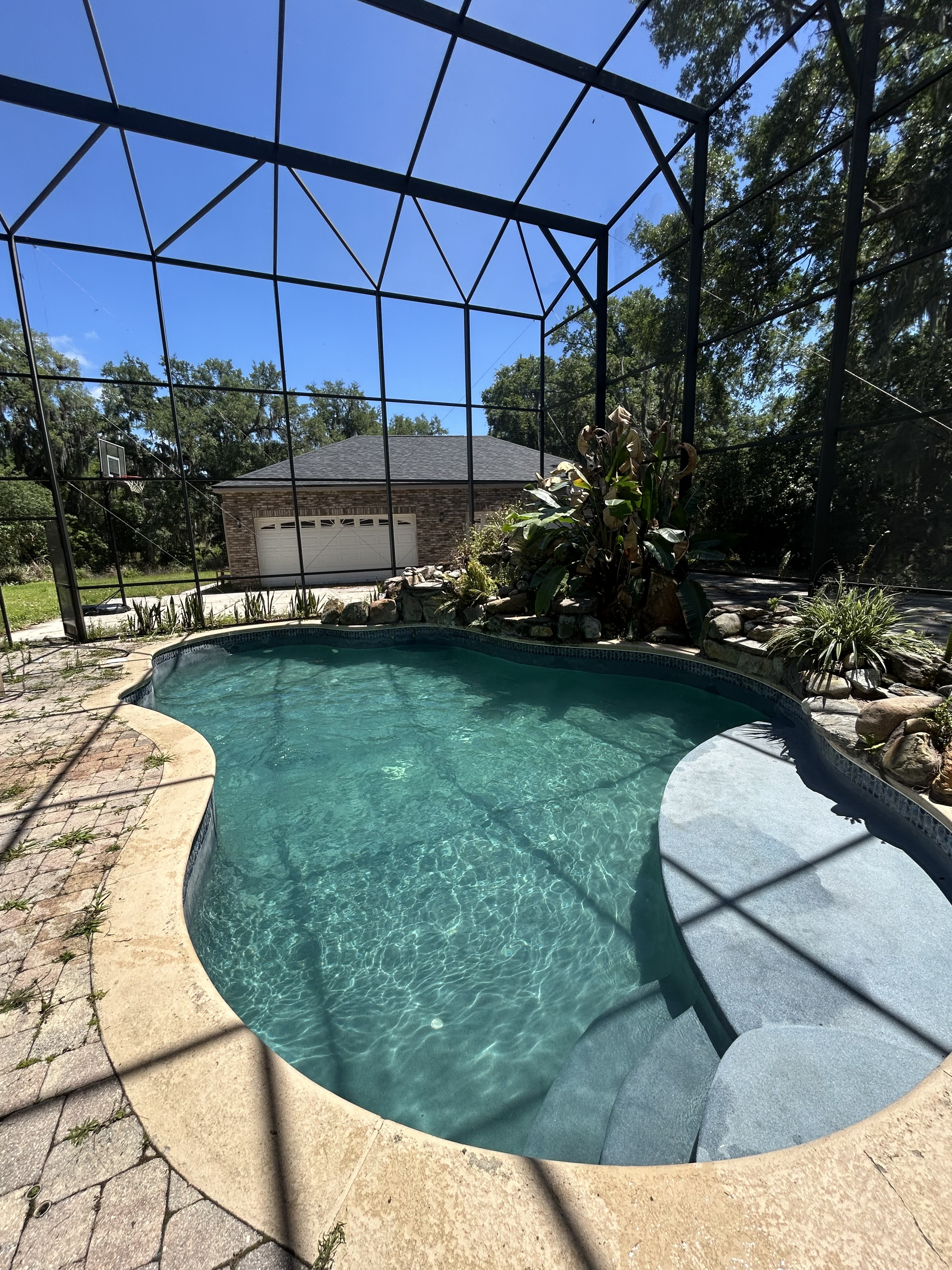
Learn the essential maintenance habits that prevent algae growth and keep your water sparkling in Florida's climate. Consistent chemical testing, proper filtration, and weekly brushing are the three pillars of a pristine pool.
Get Expert Help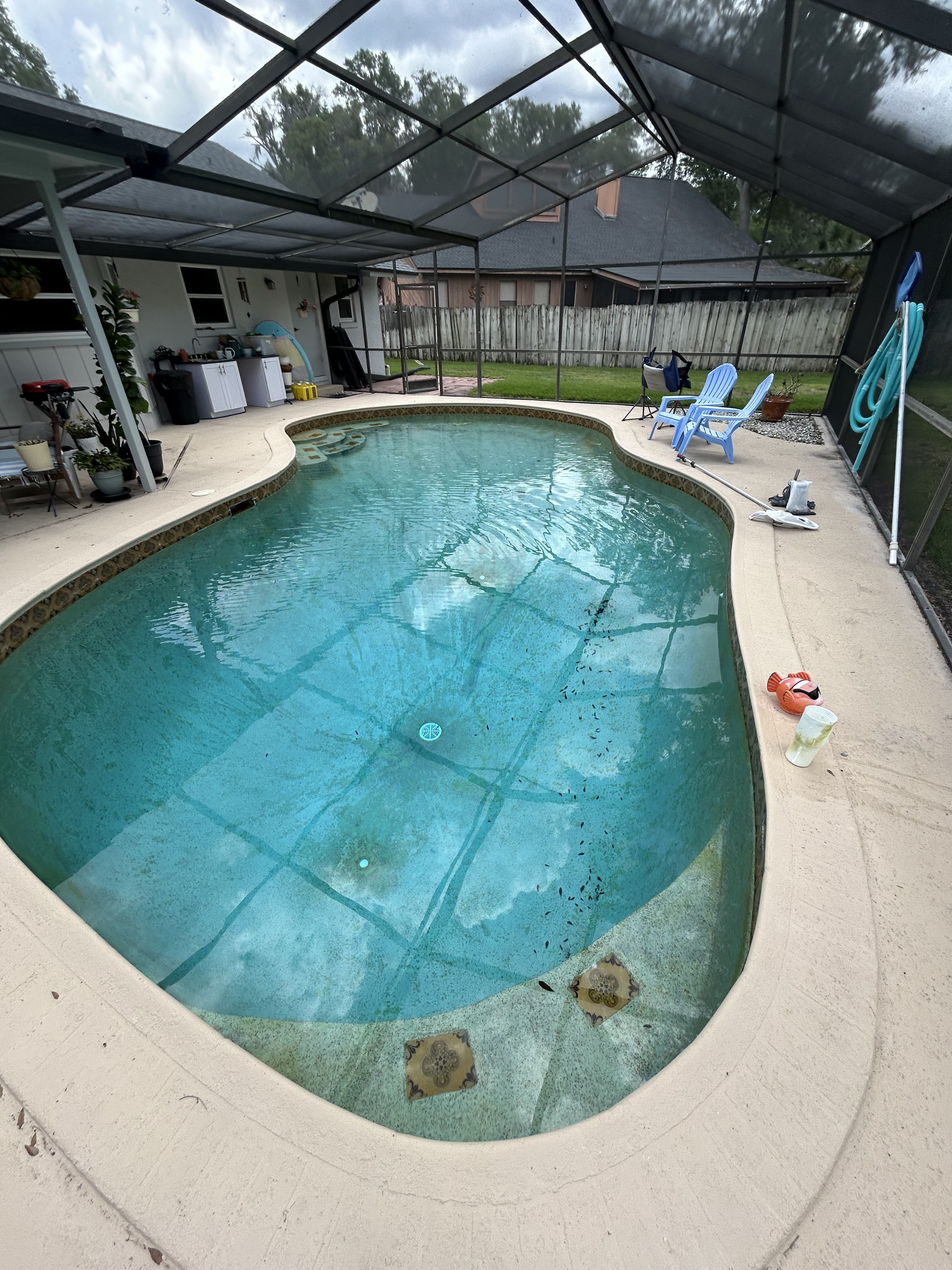
Protect your pool equipment and water quality before, during, and after tropical storms and hurricanes. Our Florida-specific checklist keeps your pool safe and ready to swim in once the weather clears.
Get Expert Help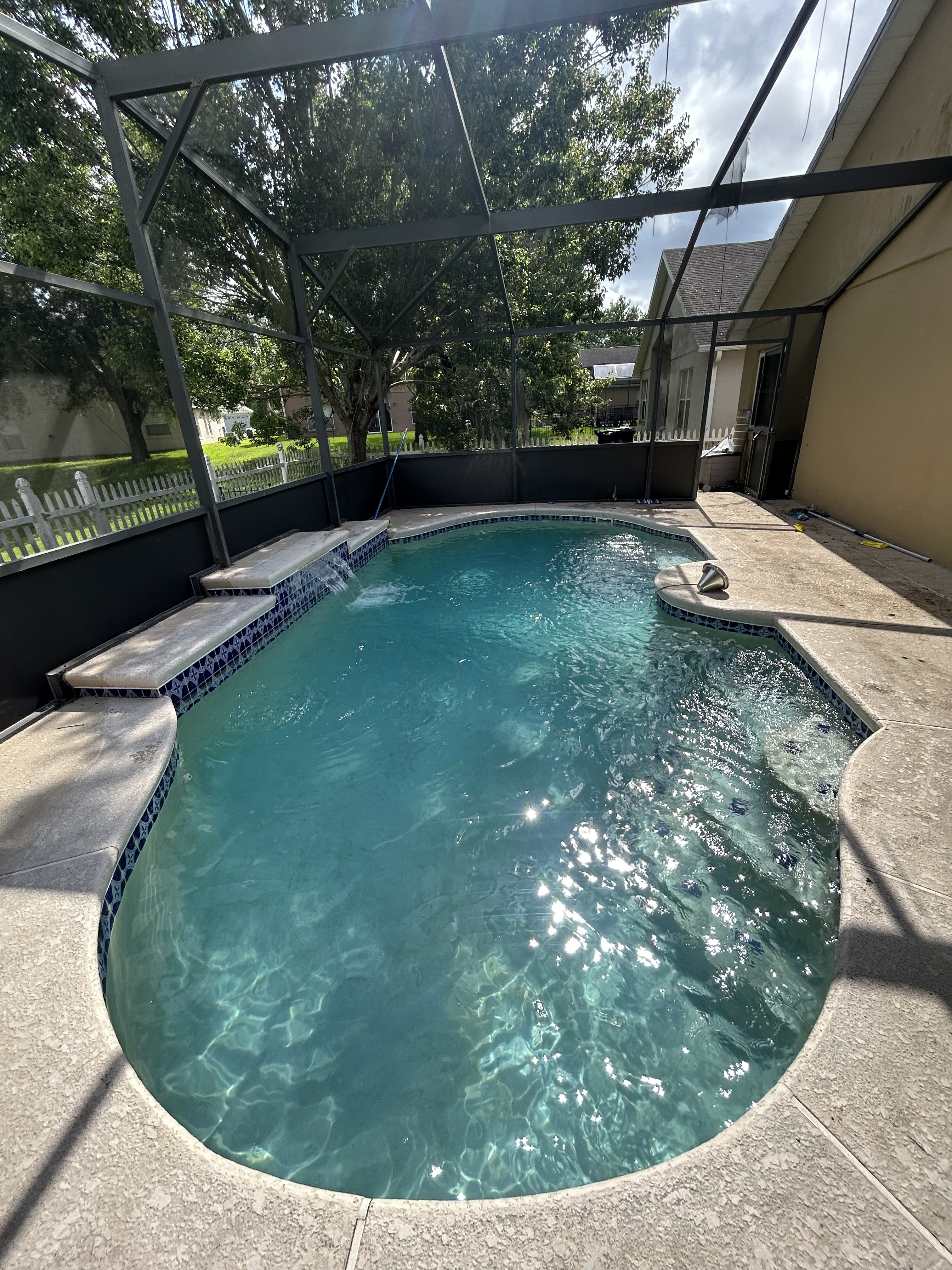
Why store test strips give you readings but not answers, and what a professional water analysis actually tells you that strips can't.
pH, chlorine, alkalinity, stabilizer, calcium hardness, and salt levels all interact with each other. A number that looks fine in isolation can be the source of a problem when another parameter is off — which is why DIY test strips tell you a number but not whether it's actually the issue.
Every pool has six key chemistry parameters a professional tests on every visit. Each one affects the others. pH affects how effective your chlorine is. Alkalinity affects how stable your pH stays. Stabilizer affects how long chlorine survives Florida's UV. Calcium hardness affects what happens to your plaster and equipment over time. Getting one right while the others drift is a temporary fix.
What matters isn't just whether a reading is technically in range — it's whether the relationship between all parameters is correct for your pool's specific conditions, volume, equipment, and usage. A professional 7-point water analysis shows this at a glance. Store test strips give you individual numbers without the context needed to act on them correctly.
If you're testing regularly and still having problems, the test isn't giving you the full picture. We offer water assessments — contact us here.
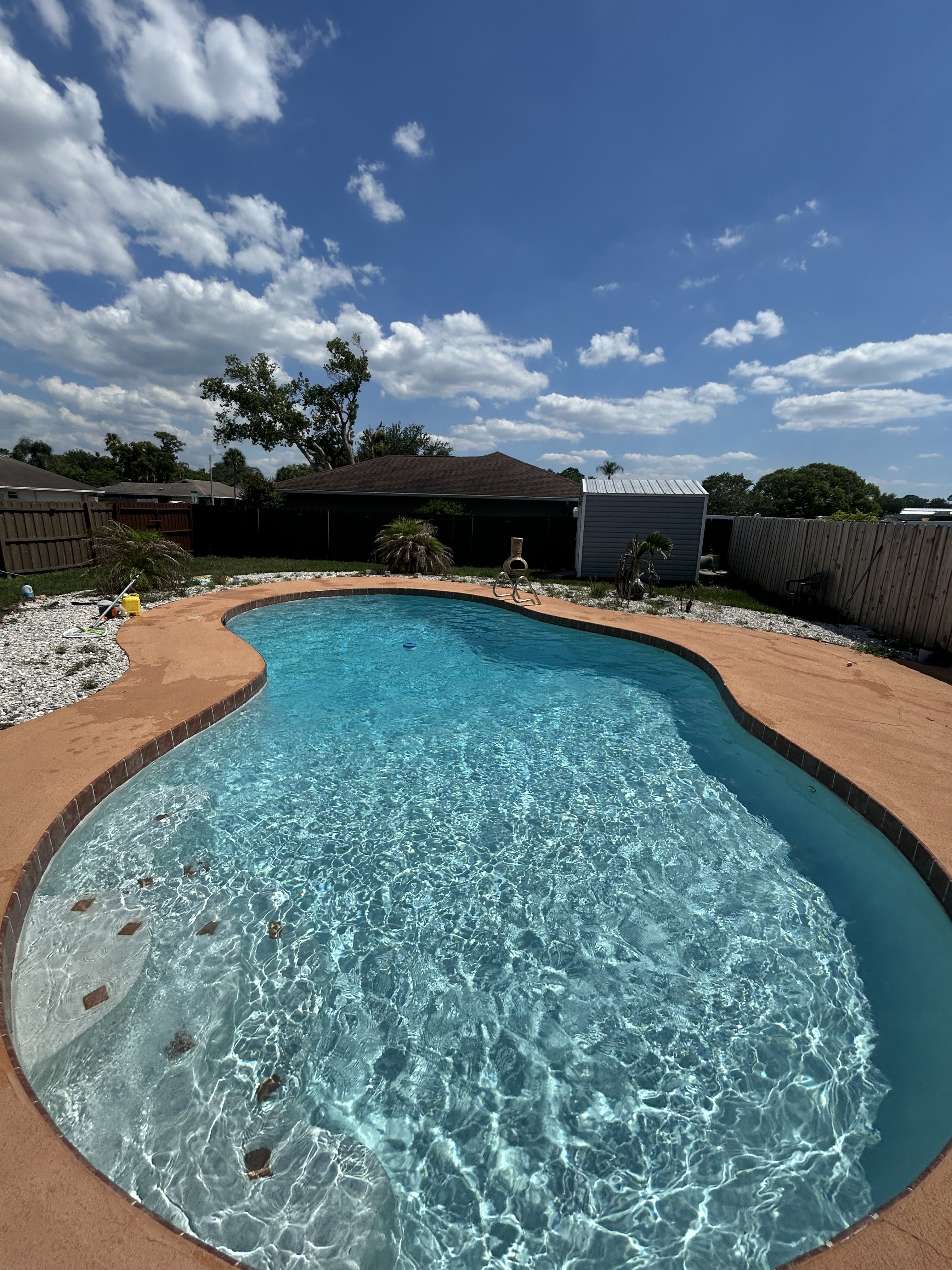
A filter that looks fine can be running at a fraction of its capacity. What pros check on every visit that homeowners never see — and what happens when it's ignored.
Florida pools run three main filter technologies — sand, cartridge, and DE (diatomaceous earth). Each works on a different principle, traps debris at a different particle size, and has a completely different service protocol. What's correct for one type is wrong for another. Using the wrong approach doesn't just fail to clean the filter — it can damage the media and reduce filtration efficiency long-term.
Your filter talks to you through its pressure gauge and your water clarity. Rising pressure, reduced jet flow, and persistent cloudiness with correct chemistry are all signs the filter is working harder than it should. What that sign actually means depends on your specific filter type — the same symptom points to different root causes across sand, cartridge, and DE systems.
Every filter type has a service interval that most homeowners miss — not because the filter looks dirty, but because the buildup that causes the most damage (oils, sunscreen, mineral scale) isn't visible. A filter that looks clean can be performing at a fraction of its rated capacity. Annual professional service catches this before it starts silently degrading your water quality and putting extra load on your pump.
Not sure what type of filter you have or when it was last properly serviced? We assess it on every visit — contact us here. Filter and pump service is included in every weekly maintenance visit. See transparent pricing.
Most pool problems aren't random. There are predictable patterns in Central Florida's climate that experienced service pros plan around before problems start.
Florida's heat, humidity, and near-constant sunshine create a perfect environment for algae and bacteria to thrive. Unlike northern states where pools get a break in winter, Florida pools stay in use 12 months a year — which means your maintenance routine never really stops.
Consistency beats intensity. A pool that gets a little attention every week will always outperform one that gets a big service every month. If you're unsure where your pool stands, we offer complimentary water chemistry assessments — reach out here. Or see everything included in our weekly pool service.
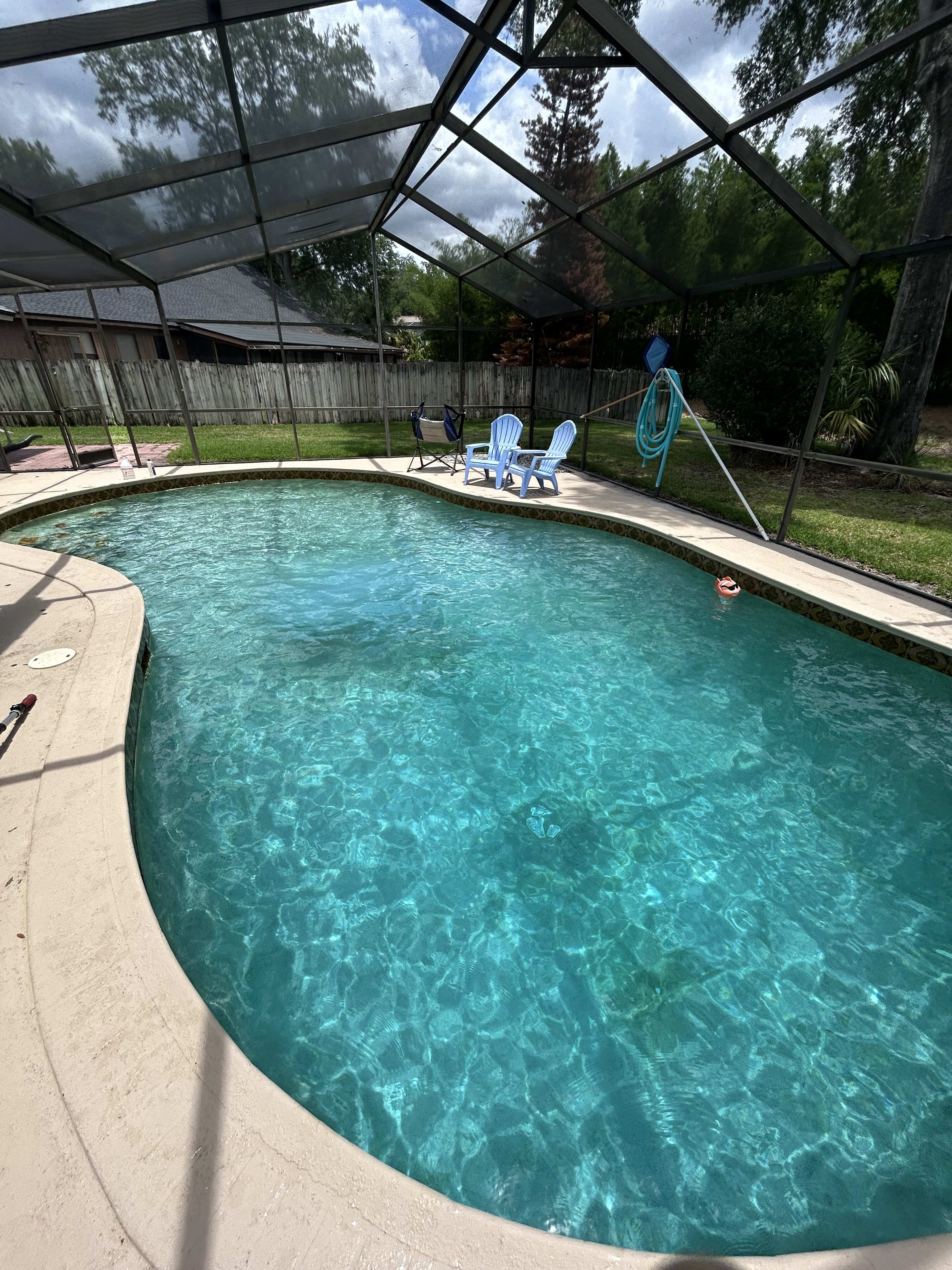
June through September hits pool chemistry from three directions at once. What changes in a professional's approach during summer months — and why it has to.
Florida summers hit pool chemistry from three directions at once: intense UV radiation that destroys chlorine faster than the rest of the year combined, water temperatures that accelerate algae growth exponentially, and daily afternoon thunderstorms that dilute your chemicals and introduce organic load. A maintenance routine that keeps your pool perfect in February will leave it green by July if nothing changes.
Weekly service visits work in cooler months. In Central Florida's summer — June through September — the chemistry moves faster than a weekly schedule can track. How much faster depends on your pool's sun exposure, bather load, and whether it's a saltwater or traditional chlorine system. The professional answer isn't a generic number — it's a cadence calibrated to your specific pool's rate of chemical consumption.
By the time you see green water, algae has already been growing for days. The professional focus in summer isn't reacting to algae — it's maintaining the conditions that prevent it from establishing a foothold in the first place. That means monitoring parameters that don't show up on consumer test strips and catching chemistry drift before it becomes a visible problem.
Florida pools lose significant water to evaporation each week in summer. Every time you refill, you're diluting your chemistry. A pool that was balanced on Monday may need readjustment by Friday without any chemicals being consumed — just from water loss and refill.
Struggling with green or cloudy water this summer? We fix it in one visit — contact us here. See how our Green to Clean service works. Wondering what it costs? See our transparent pool service pricing.
Storm recovery is one of our most common calls every hurricane season. Here's what's happening to your water chemistry — and why the fix requires more than just adding chemicals.
The window before a major storm matters. There are specific steps professionals take to protect equipment, preserve water quality, and prevent the post-storm recovery from becoming a multi-week process. Some of those steps are counterintuitive — like why you should never drain your pool before a major storm. Hydrostatic pressure from saturated ground can push an empty pool right out of the ground.
Pre-storm chemical preparation is also more involved than it sounds. It's not just adding more of what you normally add. The chemistry after a Florida rainstorm — especially from a hurricane with significant runoff — requires a specific recovery sequence to bring levels back correctly without creating a secondary problem.
Post-storm pools are one of the most common service calls we receive every hurricane season. The water looks green, the equipment may have taken a surge hit, and the chemistry can be dramatically off across multiple parameters simultaneously. Correcting it in the right order matters — getting the sequence wrong can make recovery take longer, not shorter.
If your pool turns green after a storm, we offer same-week storm recovery service. Contact us here — we respond quickly during storm season.
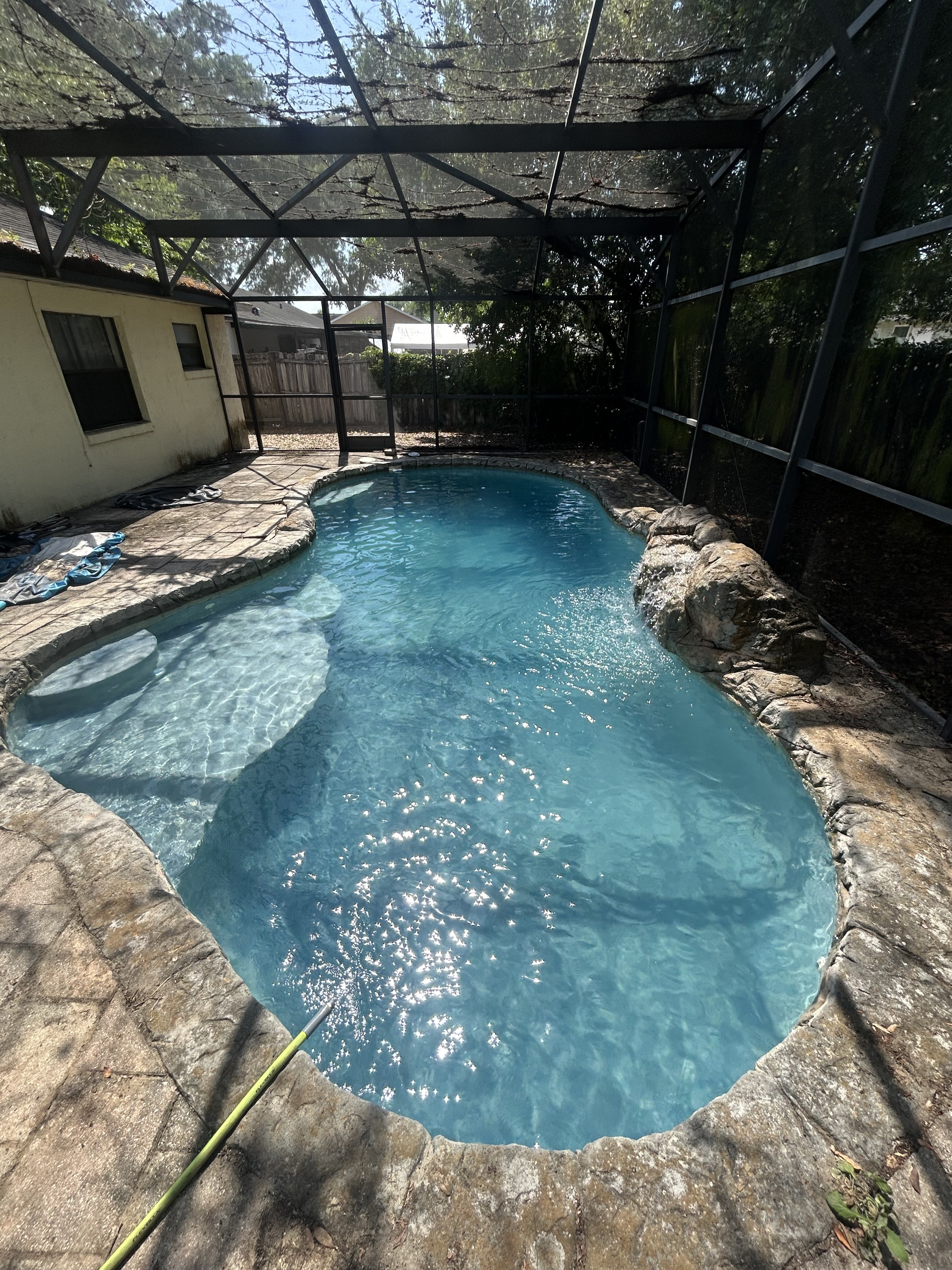
There are four distinct root causes of cloudy water — each requires a different fix. Treating the wrong one wastes money and extends the problem. Here's how pros diagnose it.
Cloudy pool water isn't a single problem with a single fix. The appearance — milky-white, dull grey, greenish haze — tells an experienced eye something different about what's actually happening in the water. Treating the symptom without identifying the root cause is why so many homeowners buy chemicals, add them, and still have a cloudy pool a day later.
There are four distinct root causes of cloudy pool water: a sanitizer problem, a pH or chemistry imbalance, a filtration failure, or accumulated dissolved solids that can only be corrected one way. Each requires a different response. Adding more shock to a filtration problem won't work. Cleaning the filter when the issue is chemistry won't work. Diagnosing correctly first is what separates a one-visit fix from a two-week problem.
This is one of the most common things we hear. A pool can be cloudy with technically adequate chlorine levels — because the problem is combined chlorine (chloramines), not free chlorine. The two look identical on a standard test strip but require completely different treatment. A professional test tells the difference immediately. Standard shock at a consumer dose does nothing to chloramines; the correction requires a specific protocol that a standard strip test won't prompt you toward.
Some cloudy water problems can't be chemically corrected — they require a partial drain. Over time, dissolved solids accumulate in pool water that can't be removed by any chemical addition. When dissolved solids or calcium levels reach a critical threshold, the water becomes permanently hazy regardless of how well everything else is balanced. A professional water analysis identifies this immediately; a consumer test strip doesn't test for it at all.
Cloudy water is a one-visit fix when diagnosed correctly. Contact us — we identify the root cause and clear it in a single service call. If it's gone fully green, our Green to Clean service handles the full recovery. See upfront pricing here.
If your pool keeps going green a week after you treat it, the problem isn't the algae — it's whatever is letting algae survive. Here's what pros look for first.
If your pool returns to green within a week or two of treatment, you treated the algae — but not what's feeding it. Algae doesn't appear randomly. It establishes when chlorine drops low enough for long enough to let spores take hold. The question is why your chlorine keeps dropping.
High phosphates. Phosphates are algae food. They enter your pool through rain runoff, fertilizers, dead leaves, and even some pool chemicals. Chlorine kills algae — but if phosphate levels are high, algae regrows as fast as chlorine can knock it back. A standard test strip doesn't test for phosphates. Most homeowners never check them.
Low or zero cyanuric acid (stabilizer). Florida's UV destroys free chlorine fast — especially in an uncovered pool. Without adequate stabilizer (30–50 ppm is the target range), your chlorine burns off within hours of a sunny afternoon. You can add chlorine daily and still have a green pool by the weekend.
Insufficient filtration run time. A variable speed pump running too few hours overnight doesn't turn the water over enough times to let chlorine do its job. Chemistry and filtration work together — you can't fix chemistry with the pump running 4 hours a day in July.
Phosphate level. Stabilizer level. Pump run time and speed programming. Filter condition and pressure. These four things account for the majority of recurring green pool cases we see across Central Florida. Fixing the right one stops the cycle.
If your pool keeps going green, call us — we identify the root cause and stop the cycle. Our Green to Clean service includes a full water analysis, not just a chemical dump. See what it costs upfront.
Most pump failures give you warning weeks before they stop working completely. Knowing the signs can save you a full motor replacement — and a green pool while you wait for parts.
Hard starting or tripping the breaker. If your pump hums for a second and shuts off, or trips its circuit breaker on startup, that's a capacitor or motor winding issue — not a random event. Capacitors are a known wear item on Florida VSPs (variable speed pumps), especially in the 3–7 year range. A capacitor replacement is a $50–$80 fix. Ignoring it leads to a burned motor.
Unusual noise. A grinding or screeching sound from a previously quiet pump means the bearings are going. Bearings failing produce metal-on-metal noise first, then complete seizure. Once you hear that sound consistently, the clock is running on how long before it stops entirely.
Water around the pump housing. A wet spot at the base of the pump, or moisture along the motor shaft, is a shaft seal failure. The shaft seal keeps pool water out of the motor cavity. Once it's leaking, water migrates toward the motor windings. Running a pump with a failed shaft seal turns a $60 seal repair into a $400+ motor replacement.
Reduced flow with no filter issue. If your return jets feel weaker than they used to and your filter pressure is normal, the problem may be impeller wear — the pump is spinning but not moving the same volume of water. This is gradual and easy to miss without a flow meter test.
A pump can run continuously, show no error codes, make no unusual sounds, and still be failing to circulate adequate water. This is impeller wear or a programming issue on a variable speed pump — the pump is technically on, but your pool isn't getting the turnover rate it needs. Chemistry problems that seem random are often filtration problems in disguise.
Hearing something off with your pump? We diagnose it on a service call — we bring a flow meter and amp draw tester on every equipment visit. See our pool equipment repair page for what we cover. Just had a new pool installed? Our 28-day new pool startup program protects new equipment from day one.
Florida's climate changes which chemicals matter and how often you need them. The list most pool stores give you is designed to sell product — here's what a CPO actually uses.
Chlorine. The primary sanitizer. In Florida you have two practical options: liquid chlorine (sodium hypochlorite) or trichlor pucks. Liquid chlorine is what professionals use — it's pure sanitizer with no side effects. Trichlor pucks are convenient but add cyanuric acid every time you use them. Over a Florida summer, puck users frequently end up with CYA levels above 100 ppm, which locks up chlorine and makes it ineffective regardless of how much you add.
Cyanuric acid (stabilizer). Protects chlorine from UV degradation. Target range: 30–50 ppm for a traditional chlorine pool, 70–80 ppm for a saltwater pool. Too low and Florida sun destroys your chlorine by noon. Too high and chlorine can't sanitize effectively. Most pool stores don't tell you about the upper limit problem.
pH adjuster (acid or soda ash). Florida pool water drifts alkaline over time — from tap water, bather load, and chemical additions. Target pH is 7.4–7.6. High pH reduces chlorine effectiveness and clouds the water. Low pH corrodes equipment and irritates eyes. You'll use muriatic acid (to lower) and soda ash (to raise) depending on which direction your pool drifts.
Alkalinity increaser. Total alkalinity buffers your pH so it doesn't swing wildly after chemical additions. Target: 80–120 ppm. Low alkalinity means your pH bounces all over the place and your other chemistry becomes unpredictable.
Phosphate remover matters more here than in most states. Florida's landscaping — St. Augustine grass, palms, oak trees — drops significant organic material into pools, and rain runoff from fertilized lawns loads phosphates into the water constantly. If you're fighting algae year-round, test phosphates before spending more money on algaecide.
Calcium hardness matters more with salt pools — and Florida has a lot of salt pools. Low calcium hardness causes a saltwater pool to pull calcium from plaster surfaces, shortening plaster life significantly.
Not sure where your water stands? We test all seven parameters on every visit — not just the three on a standard strip. See what full-service weekly maintenance includes and costs.
The honest answer depends on how green it is, how big it is, and what caused it. Here's what a realistic timeline looks like — and what shortcuts don't work.
Most Florida green pools clear within 3–7 days with a proper professional treatment. That range covers the majority of cases — light green with visible bottom clears faster, heavy green with zero visibility takes longer. Here's how to read where your pool falls.
Light green (visible bottom, water has a tint): 2–4 days. Chlorine shock, algaecide, extended filter run, and a follow-up brushing typically clears this within a weekend. Chemistry rebalance completes the job.
Medium green (murky, can see 6–12 inches down): 3–5 days. Requires heavier shock dosing, phosphate treatment if elevated, and potentially a filter cleanout partway through treatment as the dead algae loads the filter media.
Dark green or black (zero visibility): 5–10 days minimum, sometimes longer. At this stage, the chlorine demand is extreme — the pool may consume multiple shock treatments before the water starts to clear. Black algae (which roots into plaster) requires mechanical brushing in addition to chemical treatment and may need a follow-up acid wash to fully remove staining.
High phosphates are the number one reason green pools take longer to clear than expected. Chlorine kills algae — but elevated phosphates allow it to regrow as fast as chlorine can knock it back. If a pool doesn't start clearing within 48 hours of proper shock treatment, phosphates are almost always the reason.
A dirty or clogged filter also extends recovery significantly. The filter has to capture all the dead algae — if it's already at capacity, dead algae recirculates back into the pool instead of getting trapped. Backwashing or cleaning the filter during treatment, not just before it, is often necessary.
In severe cases, a drain-and-refill is faster and cheaper than extended chemical treatment. A professional assessment tells you which path makes more sense for your specific pool. Contact us for a same-week green pool assessment — we give you an honest timeline and cost before any work begins. See our full Green to Clean service page.
Monthly service isn't viable here. Florida's heat, humidity, and year-round swim season demand a different schedule — here's what CPO-certified data says.
Read Full ArticleGreen, mustard, black — each algae type needs a different treatment. Here's why Central Florida pools are especially vulnerable and how to stay ahead of it.
Read Full ArticlePhosphates are the hidden driver behind recurring algae — even in pools with correct chlorine. What they are, where they come from, and the 5-step treatment process.
Read Full ArticleStruggling to keep your chemical levels balanced week after week? These tips help, but nothing beats consistent professional maintenance. Save your weekends and let a CPO-certified technician handle it. Explore our Weekly Pool Maintenance & Service Plans to keep your pool safe and clear year-round.
Clear Ripples serves Winter Park, Orlando, Maitland, Casselberry, Oviedo, Sanford, Lake Mary, Longwood, Heathrow, Altamonte Springs, Winter Springs, Fern Park, and Alaqua Lakes. Get a free quote — no obligation.
Weekly, year-round. Florida's heat, UV, and daily summer rain keep chlorine demand and algae pressure high even in winter — a pool that gets a little attention every week will always outperform one that gets a big service every month.
Because pool chemistry is a system of six interacting parameters — pH, chlorine, alkalinity, stabilizer, calcium hardness, and salt. A number that looks fine in isolation can be the source of a problem when another parameter is off, which is why strips give you a number but not an answer.
When the pressure gauge reads 8–10 PSI above its normal clean baseline. Rising pressure means the filter is loaded and water flow is dropping — filter and pump checks are included in every weekly maintenance visit.
While these tips can help with basic maintenance, sometimes you need an expert. Let Clear Ripples take care of your pool so you can enjoy it worry-free. Serving Winter Park, Orlando, Maitland, Oviedo & more.
Get a Free Quote See All Services